

For many homeowners, the backyard represents a personal sanctuary. It is a dedicated space to unwind after a long workday, entertain friends and family on the weekends, and allow children or pets to play freely without constant supervision. However, the realities of modern suburban and urban living often complicate this ideal scenario. Shared property lines, houses built in close proximity, low sightlines, and an unfortunate increase in opportunistic property crimes can quickly compromise the safety and seclusion of your outdoor spaces. An exposed backyard not only diminishes your peace of mind but can also present significant vulnerabilities that put your family and your assets at risk.
Achieving true outdoor security and absolute privacy is rarely accomplished with a single purchase or a quick weekend fix. Instead, it requires a comprehensive, layered approach. True perimeter defense means strategically combining smart landscaping, robust physical barriers, strict access control, and modern surveillance technology. When these elements work in harmony, they create an environment that is incredibly difficult for an outsider to penetrate and equally difficult for neighbors to peer into.
By systematically assessing your property, identifying its weak points, and upgrading your perimeter layer by layer, you can transform an exposed and vulnerable yard into a completely private, impenetrable oasis. Best of all, you can achieve this level of fortification without sacrificing the aesthetic appeal or the relaxing atmosphere of your outdoor living space. Let’s explore the essential steps you need to take to maximize the privacy and security of your backyard.
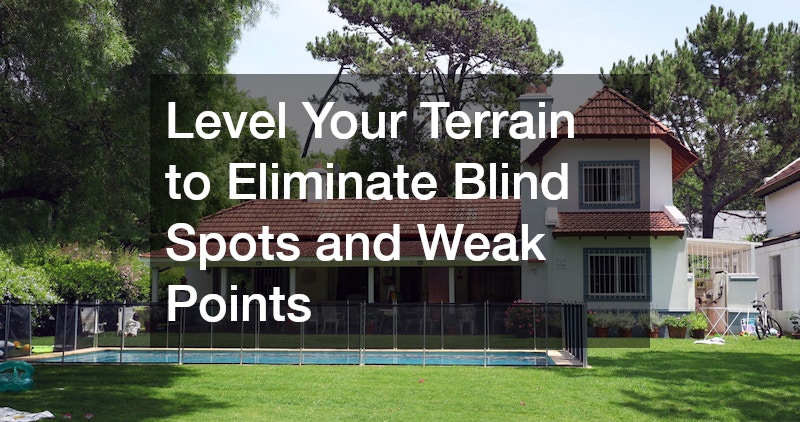
Level Your Terrain to Eliminate Blind Spots and Weak Points
Before you can effectively secure a perimeter, you must evaluate the ground it is built upon. Many property owners make the mistake of erecting barriers over uneven, sloping terrain without first addressing the underlying landscape. Heavily sloped yards or uneven property lines create natural blind spots where an intruder can hide out of sight from the street or the house. More importantly, uneven ground leaves gaping holes underneath boundaries where stray animals, pests, or even trespassers can easily slip through.
To effectively prepare your yard for maximum security, you must first assess and manage your terrain. This foundational step ensures that whatever physical barriers you install later will perform optimally and last for decades without structural failure.
-
Analyze Water Runoff: Observe your yard during a heavy rainstorm. If water is aggressively rushing toward your property lines and pooling, it will eventually erode the soil. This erosion creates massive gaps beneath physical boundaries, rendering them useless for keeping out determined pests or people.
-
Identify Natural Blind Spots: Walk your property line from the outside looking in. Note any deep dips or heavy slopes that would allow someone to crouch down and remain unseen from your back windows or patio doors.
-
Establish a Level Base: If you have severe slopes, terracing the land is not just an aesthetic choice; it is a security necessity. Creating stepped, level platforms eliminates hiding spots and gives you a clear line of sight across your entire property.
Fixing a heavily sloped yard often requires heavy lifting and structural knowledge. If your land drops off significantly near the property line, you will likely need to bring in a retaining wall contractor. These professionals can build engineered structures to hold back the earth, manage water runoff, and prevent long-term soil erosion. By stabilizing the soil, they create a perfectly level, reinforced base around the perimeter of your yard.
Preparing the ground in this manner makes the subsequent steps of your security upgrade much smoother. Establishing level ground and clear, unshifting property lines allows you to accurately measure the perimeter. This preparation is vital because it means you can present a clean, ready-to-build site to various local fence companies. When the ground is already leveled and stabilized, you will receive much more accurate, competitive quotes for your perimeter project, and the final installation will not be plagued by awkward gaps or structural weaknesses caused by shifting earth.
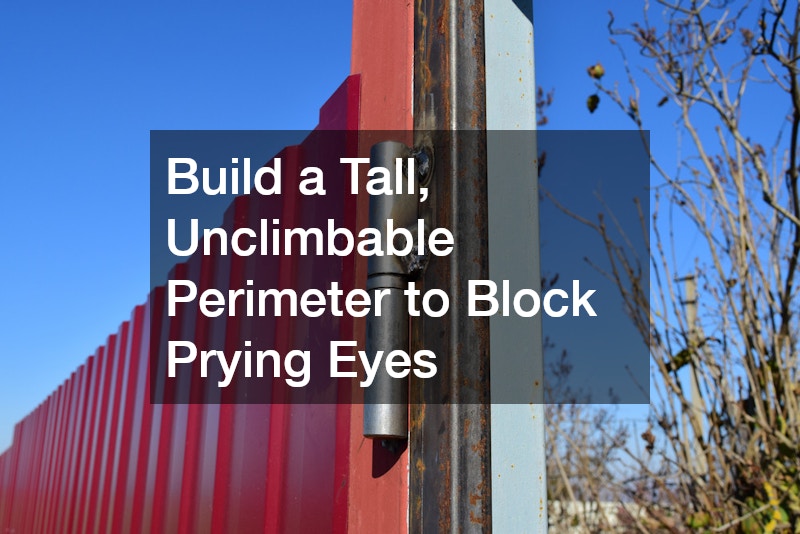
Build a Tall, Unclimbable Perimeter to Block Prying Eyes
Once the foundation of your yard is leveled and secure, the next layer of defense is the physical boundary. The primary goal of a perimeter barrier is twofold: to provide absolute visual privacy from neighbors and passersby, and to serve as a formidable physical deterrent against intrusion. Not all materials are created equal when it comes to achieving these goals, and selecting the right style is crucial for maximizing your backyard’s security.
Materials like chain-link or widely spaced wooden pickets offer virtually zero visual privacy and act as ladders for anyone looking to scale them. To truly secure the space, you need a solid, unclimbable structure.
-
Board-on-Board Wood: Traditional side-by-side wooden planks will eventually shrink as the wood dries, creating peek-a-boo gaps. Board-on-board construction overlaps the planks, ensuring that even as the wood weathers, there are no gaps for prying eyes to look through.
-
Solid Vinyl: Vinyl requires almost no maintenance and provides a completely solid, opaque wall. Because the surface is smooth, it is incredibly difficult for an intruder to gain a foothold to climb over it.
-
Masonry and Brick: While significantly more expensive, a masonry wall offers the ultimate in security and sound dampening. It cannot be easily cut or broken through and provides a permanent, imposing deterrent.
Executing a proper residential fence installation requires careful planning and adherence to local regulations. Before purchasing any materials, you must check your local Homeowners Association guidelines and municipal zoning laws. Most cities cap backyard boundary heights at six to eight feet. Maximizing this height allowance is essential; a six-foot solid barrier is generally sufficient to block the sightlines of an average adult standing on flat ground, while an eight-foot barrier provides exceptional privacy even if the neighboring house sits at a slightly higher elevation.
While it might be tempting to tackle this project yourself to save money, DIY boundary building often fails against the elements. If posts are not sunk deep enough, high winds can easily blow the entire structure down, leaving your yard completely exposed. It is highly advised to hire an experienced fence contractor for this critical layer of security. A seasoned professional understands exactly how to dig below the local frost line and secure heavy wooden or metal posts with the correct ratio of concrete. This expert installation ensures that your barrier cannot be easily pushed over, kicked in, or compromised by extreme weather, providing you with a reliable shield around your sanctuary.
Control Access Points to Keep Unauthorized Visitors Out
A fortress is only as secure as its gates. You can build the tallest, strongest perimeter in the neighborhood, but if the access points leading into your backyard are weak or easily bypassed, your security efforts are in vain. Controlling who can enter your property, and how they do so, is a vital component of backyard privacy. This requires carefully securing the side alleys, driveways, and rear entryways that serve as direct conduits to your outdoor space.
For many suburban homes, the driveway extends past the front facade and leads directly to a detached structure or a rear parking pad. This layout creates a massive vulnerability, essentially providing a paved walkway for unauthorized vehicles, delivery drivers, or trespassers to bypass the front yard and walk straight into your private space.
-
Driveway Perimeter Sealing: If your driveway extends into the rear of your property, securing this wide gap is paramount. Installing heavy-duty automatic gates across the driveway ensures the perimeter remains sealed at all times. These systems allow you to enter seamlessly with a remote or keypad but act as a massive physical barrier to anyone without authorized access.
-
Pedestrian Side Gates: The gates on the sides of your house should match the height and material of your main barrier. They should feature heavy-duty hardware, including self-closing hinges and double-sided key-lockable latches. Never rely on a simple piece of string or a basic slide bolt that can be easily reached over and undone.
-
Eliminate Exterior Hardware: Whenever possible, ensure that the hinges on your gates are installed on the inside (the yard side) rather than the outside. If hinges are exposed to the alley or the street, an intruder can simply tap the pins out and remove the entire gate, bypassing the lock entirely.
Creating a cohesive barrier means that the aesthetic and physical security of any rear-facing structures must match the strength of the new boundaries you have erected. If your driveway gate leads directly to a detached garage that sits on the property line, the garage itself becomes part of the perimeter wall.
Upgrading these rear facades is a critical step in access control. Coordinating your driveway barriers with a heavy-duty, insulated garage door installation creates a seamless, reinforced wall facing the alley or the street. Modern, insulated doors are constructed with multiple layers of steel, making them incredibly resistant to being kicked in, cut, or easily breached. By ensuring that every single entry point—from the pedestrian gates to the largest vehicular access points—is locked down with heavy-duty materials, you effectively close off all unauthorized routes into your backyard.
Fortify Secondary Structures and Vulnerable Entryways
When homeowners think about security, they naturally focus on the front door and the ground-floor windows of their primary residence. However, experienced burglars know that detached outbuildings, sheds, and rear-facing attached structures are often the path of least resistance. These secondary buildings are prime targets because they frequently house expensive tools, bicycles, and lawn equipment, and they can provide an intruder with a concealed, covered area to try and breach the main house out of sight from the street.
Fortifying these structures is a non-negotiable aspect of backyard security. Even a heavy, steel door is useless if the tracks are bent, the locks are rusted, or the internal mechanisms are failing. Older hardware is a massive security vulnerability that opportunistic criminals actively look for.
-
Secure Shed Doors and Windows: Treat your garden shed like a mini-house. Upgrade the standard, flimsy hasp lock to a heavy-duty padlock with a shielded shackle that cannot be cut with bolt cutters. If the shed has windows, apply frosted privacy film to them so thieves cannot see the valuables stored inside.
-
Reinforce Pedestrian Doors: If your detached structure has a standard side entry door, ensure it has a solid wood or metal core. Reinforce the door jamb with a heavy-duty strike plate secured by three-inch screws that bite deeply into the wall studs, making it highly resistant to kick-ins.
-
Block Window Access: For rear-facing structures with large windows, consider installing decorative interior security bars or shatter-resistant window film. This slows down an intruder significantly, often causing them to abandon the attempt due to the noise and effort required to break through.
Maintaining the hardware on larger rear structures is equally critical. You must ensure that the tracks are aligned, the springs are properly tensioned, and all locking mechanisms are functioning flawlessly. To maintain this level of security, it is wise to schedule routine garage door services. A professional technician can lubricate the moving parts, check for metal fatigue, and ensure the door closes completely flush against the concrete floor, leaving no gap for a pry bar.
Ignoring mechanical issues, such as grinding gears, a sluggish motor, or a door that won’t close tight to the ground, is an open invitation to intruders. These are signs of a failing system that could easily be forced open manually. Furthermore, prompt garage door opener repairs are vital for your perimeter’s integrity. A fully functional motorized opener does more than just lift the door; the trolley and J-arm mechanism actively hold the door down and lock it in place when it is closed. If the motor is broken and you are relying on manual lifting, or if the internal locking gears are stripped, a trespasser can easily slide a crowbar under the weather stripping and heave the door open from the outside. Keeping this machinery in top condition is essential to keeping your backyard locked down.

Illuminate and Monitor Your Property Around the Clock
The final layer of a comprehensive backyard security plan relies on modern technology to detect, deter, and document any threats before they ever physically touch your perimeter. A well-lit and actively monitored yard strips away a burglar’s greatest asset: the cover of darkness. By implementing strategic illumination and high-definition surveillance, you create an environment where an intruder feels immediately exposed and highly vulnerable to capture.
Strategic lighting is an incredibly powerful psychological deterrent. A yard bathed in light signals to a criminal that the property is cared for and closely watched. However, leaving blazing floodlights on all night can annoy your neighbors and run up your electricity bill.
-
Motion-Activated Floodlights: The sudden, blinding shock of a motion-sensor light turning on is often enough to send an intruder running. Install these fixtures high up under the eaves so they cannot be easily unscrewed or tampered with. Focus them over high-risk areas like rear entryways, side alleys, driveway gates, and the deep, dark corners of the yard.
-
Ambient Landscape Lighting: Use low-voltage pathway lights and uplighting on trees to eliminate ambient shadows throughout the yard. This baseline of light ensures that even if a motion sensor isn’t tripped immediately, there is no total darkness for a trespasser to hide within.
-
Smart Bulbs and Timers: Utilize smart lighting systems for your back patio and porch. Set schedules so the lights turn on and off at random intervals while you are on vacation, creating the illusion that someone is home and active in the rear of the house.
To complement the lighting, you need eyes in the sky. Modern surveillance acts as both a visual deterrent and a vital tool for evidence collection should an incident occur. The optimal placements for security cameras are high on the roofline, well out of reach of broom handles or spray paint. Ensure you have overlapping fields of view covering the rear gate, the patio doors, the detached outbuildings, and any ground-floor windows. Choose models with color night vision, wide-angle lenses, and durable weatherproofing to withstand extreme temperatures and heavy rain.
The true power of these technological upgrades lies in their integration. Standalone cameras are helpful, but they require you to actively check a feed. Instead, sync your cameras and motion lights with comprehensive smart home security systems. This integration transforms passive recording devices into an active defense network. A modern system provides instant mobile alerts the second a human figure crosses your property line. It allows you to use two-way audio to yell out and warn off trespassers in real-time from your smartphone, regardless of where you are in the world. Furthermore, these integrated systems can be configured to automatically trigger outdoor sirens, flash the exterior lights, and instantly dispatch local authorities if a door or window sensor on the physical perimeter is breached.
Conclusion
Maximizing the privacy and security of your backyard is not a one-time chore; it is an ongoing commitment to protecting your sanctuary. By adopting a layered methodology—leveling the ground to remove vulnerabilities, erecting solid physical boundaries, securing all vehicular and pedestrian access points, fortifying your outbuildings, and installing modern, integrated surveillance—you create a formidable defense that deters criminals and blocks prying eyes.
To truly understand the current state of your outdoor security, you need to view your property through a different lens. Tonight, once the sun goes down, walk around the outside of your property. Look at your backyard from the perspective of an outsider. Search for the dark corners where your lighting fails to reach. Test your side gates to see if the latches hold firm. Look for easily scalable boundary lines, broken locks on sheds, or areas where the ground has washed away beneath your barriers. This simple audit will instantly reveal the gaps in your defense.
Taking the necessary steps to secure your perimeter does much more than just protect your physical assets and lower your homeowner’s insurance premiums. It fundamentally reclaims the backyard as a stress-free haven for you and your family. When you know the perimeter is locked down, you can truly relax in your outdoor space. Do not wait for a security breach to force your hand. Start small, pick one layer of your outdoor security plan, and begin tackling your perimeter upgrades this weekend.